What Makes Professional Commercial Photography Effective?
Two companies can offer the same service at the same price, and the one with sharper, more consistent photos often wins the customer. Images carry real business weight, and properties with professional photos saw 8.98% higher occupancy than those using owner-taken shots. Website visitors, social media followers, and print readers often judge a business by its images before they read a single word. Blurry product shots, mismatched colors, or generic stock photos can quietly weaken trust and send potential customers to a competitor.
Results depend on far more than a good camera. Effective professional commercial photography goes beyond attractive pictures. Strong commercial images start with a clear goal, follow the brand closely, and arrive ready to use on the platforms where customers will see them. Lighting, composition, real people, careful editing, and clear usage rights then decide whether those images help the business grow.
1. A Clear Goal and Creative Brief
Effective commercial images start long before the camera comes out. Shared plans keep the photographer, the marketing team, and the final images aligned.
Defining the Purpose
Every shoot needs one main job, such as selling a product, introducing a team, or promoting a new location. That goal decides the setting, the mood, and the shot list. Photos made without a clear purpose often look good but fail to move customers toward a decision.

What a Strong Brief Covers
Useful creative briefs answer the key questions before shoot day. Strong briefs usually include:
- The goal and target audience
- The platforms where photos will appear
- Brand colors, mood, and style references
- Shot list with must-have images
- Deadlines and delivery formats
Clear briefs save time during the shoot and reduce costly reshoots. The photographer can then focus on getting the right shots instead of guessing at the goal.
2. Consistent Brand Style
Customers recognize brands faster when their visuals look and feel the same everywhere. Matching colors, lighting, and editing across a website, social media, and print builds familiarity over time.
Consistency does not mean identical photos. Product shots, team portraits, and behind-the-scenes images can all look different and still share the same tone, color palette, and level of polish. Professional photographers often build a style guide during the first shoot, which makes later shoots match the original set.
3. Purposeful Lighting
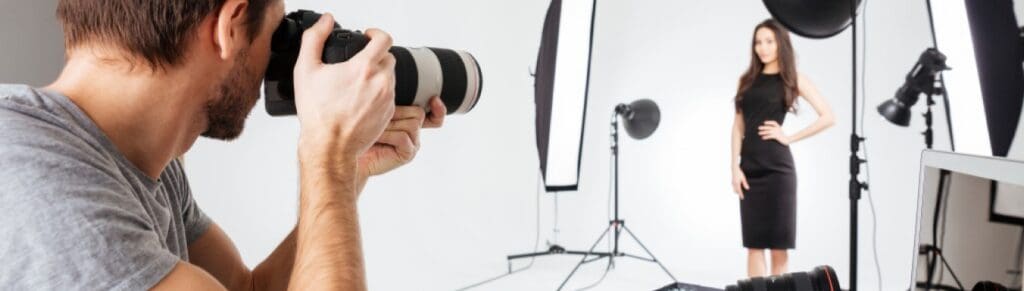
Lighting shapes the mood of a commercial photo more than any other single element. The right setup depends on the subject and the message:
- Natural light: Soft window or outdoor light suits lifestyle, food, and approachable brand images.
- Studio flash (strobes): Controlled flash produces clean, repeatable results for products and catalog work.
- Mixed lighting: Combining natural and artificial light keeps a real setting while adding polish.
- Light shaping: Diffusers, reflectors, and modifiers soften shadows or add contrast where the image needs drama.
Poor lighting can make even a premium product look cheap. Planned lighting, by contrast, highlights texture, color, and detail that customers want to see.
4. Strong Composition
Composition guides the viewer’s eye to the most important part of the frame. Placing the subject off center, using lines in the scene that lead the eye to the subject, and keeping the background simple all help the main message stand out quickly.
Commercial photos also need room for the brand’s design work. Leaving clean empty space allows designers to add headlines, logos, or buttons without covering the product. Planning for this space during the shoot avoids awkward crops and stretched images later.
5. Real People and Authentic Moments
Customers connect with real people faster than with staged poses or generic stock photos. Showing actual employees, customers, or natural interactions adds credibility that styled perfection cannot match.
Real faces only help when the photos look as polished as the brand. At Christopher Tierney Photography, I capture business owners, teams, and staff in their own workspaces, giving your website and marketing professional headshots and team images in place of generic stock. Customers then see the actual people they will be working with.
Shoot Note
Ask models to look toward the product or the headline area instead of straight into the camera. That simple direction moves the viewer’s eye to the spot where the brand needs it.
6. Accurate Product Detail
Product photos often decide the sale on their own. Shoppers want to inspect color, texture, and size before they buy.
Multiple Angles
Customers rely heavily on images, and 56% of users explore product images as their first action on a product page. Front, side, back, and close-up detail shots answer questions before customers have to ask them. Accurate color matters too, since returns often follow when a product looks different in person.
Scale and Context
Images that show size and use help customers picture the product in their own lives. Useful context shots include:
- The product in a hand or next to a familiar object
- Lifestyle images in a real setting
- Detail shots of materials and finishes
Context shots work alongside clean studio images instead of replacing them. Together, they give customers both the facts and the feeling they need to buy.
I plan commercial shoots around the exact images your website and marketing need, from clean product shots to lifestyle scenes. My commercial photography service covers lighting, styling, and editing in one coordinated process. You receive images that match your brand and arrive ready to publish.
7. Professional Editing and Retouching
Editing turns strong captures into polished, consistent final images. Professional workflows usually follow these steps:
- Correct color and white balance so products appear true to life.
- Adjust exposure and contrast for a clean, balanced look.
- Retouch dust, blemishes, and small distractions carefully, without overdoing it.
- Match the full set to the brand’s color and style.
- Export finals in the sizes and formats the brief requires.
Over-editing can hurt credibility as much as poor editing. The goal is images that look natural and accurate, only cleaner.
8. Files Ready for All Platforms
Effective commercial photos fit the places they appear without awkward cropping or slow loading. Planning formats in advance prevents last-minute resizing that cuts off key details.
| Platform | Recommended Ratio | Common Format |
| Website main banner | 16:9 | JPG or WebP |
| Instagram feed | 4:5 | JPG |
| LinkedIn post image | 1.91:1 | JPG or PNG |
| Product listing | 1:1 | JPG or PNG |
| Print materials | Varies by size | High-resolution TIFF (300 dpi) |
Optimized file sizes keep websites fast, and descriptive alt text makes images accessible and easier for search engines to understand. Still, 55.5% of top home pages lack alt text, giving businesses that add it a clear advantage.
9. Clear Usage Rights
Commercial images are only useful if the business knows where and how long it can use them. Clear licenses spell out the approved uses, such as websites, social media, print ads, or packaging.
Usage terms also protect both sides. The photographer typically keeps the copyright, while the business receives the rights it needs for its marketing plans. Settling these details before the shoot avoids surprise fees or legal problems later.
Licensing Basics
- Usage scope: Where the images can appear.
- Duration: For how long the license lasts.
- Exclusivity: Whether the photographer can license the images to others.
Effective vs Ineffective Commercial Photos
The difference between photos that work and photos that fail to connect with customers usually comes down to planning. The comparison below shows the most common gaps.
| Element | Effective Photos | Ineffective Photos |
| Purpose | Built around one clear goal | Taken without a plan |
| Brand style | Consistent colors and mood | Mixed styles across channels |
| Lighting | Planned for the subject | Flat or harsh |
| People | Real and well-directed | Stiff poses or generic stock |
| Product detail | Multiple angles and true color | One angle and color shifts |
| Files | Sized for all platforms | Stretched or slow to load |
What is the difference between commercial and editorial photography?
Commercial photography promotes or sells a product, service, or brand. Editorial photography illustrates news stories, articles, and magazine features. Commercial images usually require licenses and model releases, while editorial images cannot be used for advertising without extra permissions.
How long does a commercial photo shoot take?
Simple headshot or product sessions can take a few hours. Larger shoots involving multiple locations, models, or detailed product sets often run a full day or longer. Clear shot lists keep the schedule efficient and predictable.
Do commercial photographers provide RAW files?
Most commercial photographers deliver edited final images instead of RAW files. RAW files need processing to look finished and do not reflect the photographer’s final style. Some photographers provide them by agreement, often for an added fee.
What is a model release in commercial photography?
Model releases are signed forms that permit the use of a person’s image for commercial purposes. Businesses need one for anyone recognizable in advertising or marketing photos, including employees and customers.
What makes a commercial photographer different from a portrait photographer?
Commercial photographers focus on business goals, brand guidelines, and usage rights. Portrait photographers capture people for personal use. Many photographers do both, but commercial work requires planning around marketing needs and delivery formats.
Making Every Image Work for Your Business
Effective professional commercial photography brings strategy and skill together. A clear brief, consistent style, and purposeful lighting set the foundation, while strong composition and real people make images connect. Accurate product detail, careful editing, and files ready for all platforms then turn good photos into marketing assets. Clear usage rights protect the investment for years to come.
Omaha businesses working with Christopher Tierney Photography start with a short brief call, and then the full setup comes to your office, storefront, or job site, so headshots, team photos, and branded shots are handled in one visit. Retouched files arrive sized and cropped for web and print, and a full commercial license covers your website, socials, print, and ads with no extra fees for reuse. Share your project details now for a quote matched to the scope of your shoot.