Best Tips for Photographing Bands During Live Performances
The lights drop, the drummer counts in, and you have three songs to get the shot before security moves photographers away from the front of the stage. Live music draws big crowds, and 38% of U.S. adults attended at least one live performance in 2022. The bands on those stages need photos that capture the energy of the night.
Photographing bands during live performances means working in near darkness, around fast-moving subjects and colored lights that change without warning. Strong results come from preparation, the right gear, and settings that hold up when the light shifts. The ten tips below cover the full process, from the moment you arrive at the venue to the final edit.
1. Know the Venue and Its Rules
Preparation starts before the first song. Knowing the rules and the room keeps you shooting instead of guessing.
Photo Pass and Shooting Rules
Most venues and tours set clear rules for photographers, and breaking them can end your night early. Check these points before the show:
- Whether you need a photo pass or credentials
- The “first three songs” limit at many venues
- Flash restrictions, which are common at concerts
- Pit access and where you can stand
- Any release forms the band or venue requires
Asking the band or venue in advance avoids surprises at the door. Clear answers also help you plan your lens choices and positions.
Scouting the Room
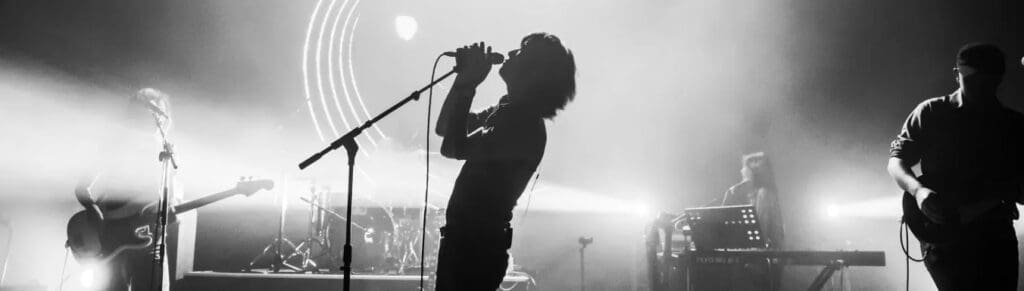
Arrive early to study the stage layout, lighting rig, and crowd flow. Small clubs often have low ceilings and harsh colored lights, while theaters give you more room and steadier lighting. If you can, watch the sound check to see where band members stand and how the lights move.
2. Pack Fast Lenses
Lenses with wide apertures let in more light, which matters more than almost anything else in a dark venue. These options work well for live music:
- 24 to 70mm f/2.8: This versatile zoom covers wide stage shots and half-body portraits from the front of the stage.
- 70 to 200mm f/2.8: This telephoto lens reaches the drummer and back-line players from a distance.
- 35mm, 50mm or 85mm prime at f/1.4 to f/1.8: These lenses gather even more light for very dark clubs.
- 16 to 35mm wide-angle: This lens captures the full stage and crowd in smaller rooms.
Start with one zoom and one fast prime if you want to travel light. That pair covers most situations at small and mid-size venues.
3. Use a Fast Shutter Speed
Performers rarely stand still, and slow shutter speeds turn their movement into blur. A shutter speed of 1/250 of a second is a good starting point for singers and guitarists. Drummers, jumping performers, and fast hand movements often need 1/500 or faster.
Slower speeds still have a creative place. Shooting at 1/60 can show motion in a spinning guitarist or a whipping hair flip. Use these slower settings on purpose and only after you have sharp frames in the bag.
4. Raise Your ISO Without Fear
Many photographers keep ISO low because they worry about grainy images. In a dark venue, that habit leads to slow shutter speeds and blurry shots, which are much harder to fix than noise. Modern cameras handle ISO 3200 to 6400 well, and many produce usable files at 12800.
Raising the ISO lets you keep a fast shutter speed and a wide aperture together. Noise reduction tools in editing software then clean up much of the remaining grain. A sharp photo with some grain is far more useful than a clean photo with motion blur.
5. Shoot in RAW
RAW files hold far more information than JPEGs, and that extra data matters under stage lights. Shooting RAW gives you these advantages:
- more room to fix white balance under colored lights
- better recovery of bright highlights and dark shadows
- cleaner noise reduction during editing
- more control over skin tones under red and blue washes
RAW files take up more space on your memory card, which means you should carry extra cards. That small cost buys a great deal of editing freedom.
6. Meter for the Stage Lights
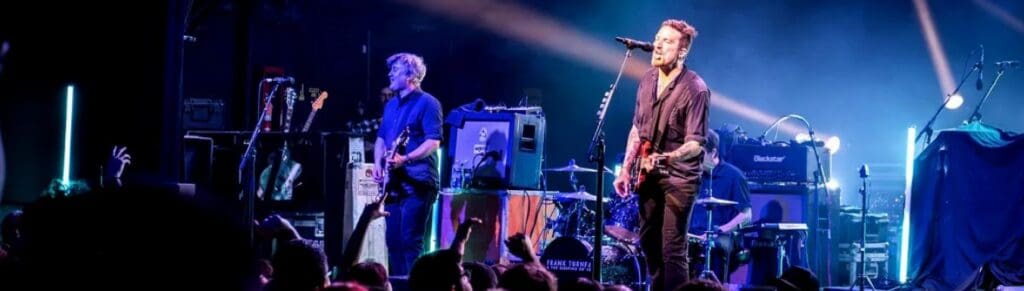
Stage lighting changes from song to song, and your camera’s meter can struggle to keep up. Spot or center-weighted metering on the performer’s face gives more reliable exposure than metering the whole frame. Bright spotlights can still blow out skin tones, so slight underexposure often protects the highlights.
Watch the lighting pattern during the first song. Many shows repeat lighting cues, and learning them helps you predict when a face will be lit well.
Red Light Fix
Strong red stage lighting often hides facial detail and makes skin look flat. Converting those frames to black and white restores contrast and turns a problem shot into a strong image.
7. Anticipate Peak Moments
The best concert photos usually come from moments that last a fraction of a second. The brain can recognize an image seen for just 13 milliseconds, and a well-timed peak moment is what makes viewers stop scrolling. Listening to the band’s music before the show helps you predict guitar solos, big choruses, and drum fills.
Watch the performers for signals, such as a singer stepping to the edge of the stage or a guitarist turning toward the crowd. Short bursts of three to five frames help you catch the exact peak without filling your card. Patience matters too, since the best moment often arrives late in a song.
8. Vary Your Angles and Distances
A strong concert gallery tells the story of the whole night. Mixing shot types keeps the set interesting for the band and its fans.
Wide Stage Shots
Wide frames show the full band, the lighting design, and the size of the crowd. These shots work well for venue promotion and band press kits.
Tight Portraits
Close shots of faces and expressions capture emotion that wide frames miss. A telephoto lens lets you get these portraits without crowding the performer.
Crowd and Detail Shots
Fans singing along, hands in the air, and close-ups of instruments add depth to the story. Detail shots of setlists, pedals, and drumsticks also give bands useful content for social media.
9. Protect Your Hearing
Concert photographers spend hours close to loud speakers, which puts their hearing at real risk. Concerts often reach 94 to 110 dBA, and just 14 minutes at 100 dBA can damage hearing. Musician’s earplugs lower the volume evenly, which lets you still hear the music and the band’s cues.
Keep a pair in your camera bag at all times. Standing a little away from the main speakers between songs also helps.
Gear Bag Check
✓ Musician’s earplugs
✓ Spare batteries and memory cards
✓ Lens cloth for sweat and fog
✓ Small flashlight for changing settings in the dark
10. Edit and Deliver Quickly
Concert photos have the most value in the hours after the show, while fans are still talking about it. Follow this simple workflow to deliver fast:
- Cull the set quickly and keep only the strongest frames.
- Correct white balance and exposure as a batch.
- Apply noise reduction to high ISO images.
- Crop for impact and check for distracting elements.
- Export web-sized files and deliver them within 24 to 48 hours.
Fast delivery helps bands post while the buzz is fresh. About 80% of U.S. adults ages 18 to 29 use Instagram, and that is where many fans look for photos from last night’s show.
At Christopher Tierney Photography, I photograph live shows across Omaha for bands that want images ready to post while the crowd is still talking. My band and concert photography covers the full set, from wide stage shots to tight portraits. You get an edited gallery fast, sized for social media and your press kit.
Starting Camera Settings for Live Shows
Settings depend on the venue, the lighting, and the band’s energy. The table below offers starting points you can adjust as the show unfolds.
| Venue Type | Shutter Speed | Aperture | ISO |
| Small club or bar | 1/250 | f/1.8 to f/2.8 | 3200 to 6400 |
| Mid-size theater | 1/320 | f/2.8 | 1600 to 3200 |
| Arena | 1/500 | f/2.8 to f/4 | 800 to 1600 |
| Outdoor festival by day | 1/1000 | f/4 | 100 to 400 |
| Outdoor festival at night | 1/320 | f/2.8 | 1600 to 3200 |
Treat these numbers as a starting point, not a fixed rule. Check your first few frames and adjust as the lights change.
How do photographers get a photo pass for a concert?
Most photo passes come through the band, its management, a publicist, or the venue. Local photographers often start by contacting smaller bands directly and building a portfolio that shows they can work professionally in the photo pit, the space between the stage and the crowd.
Can you photograph a concert with a phone?
Phones can capture good concert moments, especially from the crowd. Small sensors struggle in dark venues, though, and fixed lenses limit reach. Dedicated cameras with fast lenses produce sharper images and handle low light far better.
What type of camera works best for concert photography?
Full-frame mirrorless cameras tend to perform best because they handle high ISO with less noise. Fast autofocus, silent shutter modes, and good battery life also matter during long shows in dark venues.
Who owns the copyright to concert photos?
In the United States, the photographer usually owns the copyright by default. Bands and venues typically receive a license to use the images, unless a written contract transfers ownership or sets different terms.
Is concert photography hard to learn?
Concert photography takes practice because light, movement, and limited time all work against you. Starting at small local shows builds skill quickly, and reviewing your own photos after each gig speeds up improvement.
Getting the Shot When It Counts
Great results when photographing bands come from preparation and quick decisions. Fast lenses, a quick shutter speed, and confident ISO choices handle the dark, while RAW files and smart metering protect detail under shifting lights. Timing, varied angles, and fast delivery turn good frames into photos bands actually use. Protecting your hearing keeps you shooting for many seasons to come.
Christopher Tierney Photography covers live shows across Omaha, from packed basement gigs to festival main stages, with fast lenses and venue light that keep the stage colors true. Press photos, merch and cover art can be shot alongside your set, giving your live gallery, online store and record sleeve one consistent look. Send your date and venue to book your next gig at ctfoto.net, and even a rough date is enough to check availability.