What Types of Commercial Photography Do Businesses Need?
Your website still shows a team photo from three hires ago, your LinkedIn headshot was cropped from a wedding, and your product images were taken on a phone on a busy afternoon. Customers notice these gaps quickly, often before they read a single line about your services.
Commercial photography covers the images a business uses to sell, inform, and build trust, from headshots to product shots to event coverage. Knowing which types your business actually needs lets you spend your budget on photos that bring in customers, not ones that sit unused in a folder.
What Is Commercial Photography?
Commercial photography is any photography created for business use, such as marketing, advertising, sales, or internal communication. The images appear on websites, social media, packaging, ads, proposals, and printed materials.
Unlike personal portraits, commercial images are planned around a business goal. A product photo needs to show detail and scale, while a team photo needs to show customers who they will work with. Usage rights also matter here, since business images are often published widely and reused for several years.
Types of Commercial Photography Your Business May Need
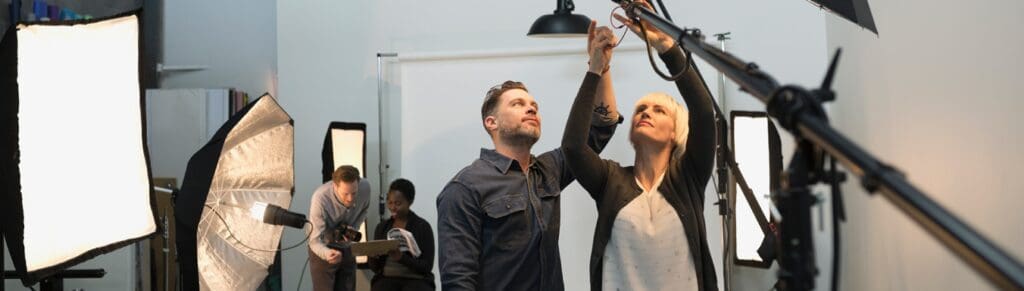
Most businesses need more than one type of photo, though few need all of them at once. These eight types cover the images companies use most.
Headshots and Team Portraits
Headshots are often the first image a client sees of the people behind your business. Consistent portraits across your team page, LinkedIn profiles, email signatures, and proposals make your company look organized and approachable.
Even a basic profile photo makes a difference, since having a profile photo results in up to 21x more profile views and 9x more connection requests. Matching the backgrounds, lighting, and framing across your whole team takes that effect further.
Brand and Lifestyle Photography
Brand photography shows your business in action, with real people, real spaces, and real work. These images give your marketing a consistent look across channels.
- Behind the scenes: Your team at work, preparing orders, meeting clients or solving problems
- Workspace details: Signage, tools, materials, and spaces that reflect your brand
- Customer moments: Services being delivered, with your clients’ permission
- Founder story: Portraits and candid photos of owners for about pages, press, and interviews
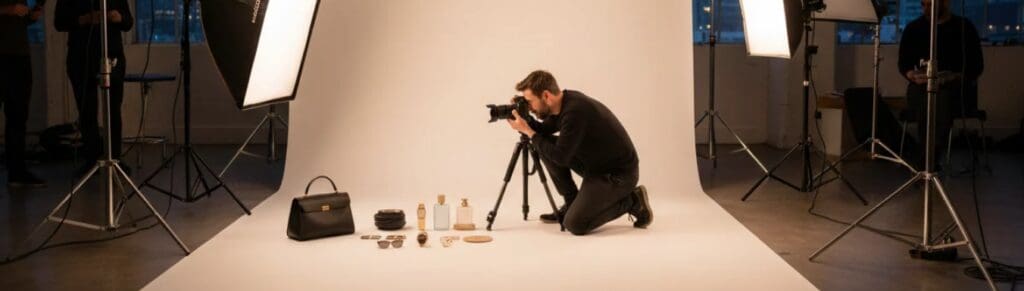
Product Photography
Product photography matters most for businesses that sell online or through catalogs. Shoppers rely on images to judge size, color, texture, and quality. In usability testing, 56% of users’ first actions during testing, upon arriving on the product details page, were to explore the images.
Most product sets include a mix of these shots:
- Clean white or neutral background images
- Detail and close-up shots
- In-scale images that show size
- Lifestyle shots of the product in use
Event Photography
Event coverage follows the shape of the day, which is why photographers plan it in stages.
- Before guests arrive: Setup details, branded signage, the empty venue and the team getting ready.
- During the program: Speakers, performers, award moments, crowd reactions and sponsor displays.
- After the main moments: Candid networking, group photos and the final wide shots of a full room.
These images feed press releases, recap emails, social media posts and next year’s promotion.
Workplace and Location Photography
Location photos show customers what to expect before they arrive. A complete location set usually covers:
✓ The building front, signage and entrance
✓ Reception areas and waiting spaces
✓ Offices, showrooms or dining rooms during working hours
✓ Parking and accessibility features
✓ Detail shots that reflect the brand, such as artwork or materials
Architectural and Real Estate Photography
Architects, builders, interior designers, property managers and hotels rely on images that capture space, light and lines accurately. This work calls for careful perspective control, wide lenses, and timing around natural light, which sets it apart from general location photos.
Worth Knowing:
Architectural shoots are often scheduled around the sun. Exteriors are commonly photographed early in the morning, late in the afternoon, or at dusk, when soft light and lit windows show off a building’s shape and warmth.
Food and Menu Photography
Restaurants, cafés, caterers and food brands usually plan food shoots by priority:
- Signature dishes that bring customers in
- Full menu items for delivery apps and online ordering
- Drinks, desserts and seasonal specials
- Kitchen and chef shots that show care and quality
- Table settings and dining room atmosphere
Well-lit, styled dishes help customers choose what to order and show what portions and presentation to expect.
Social Media and Advertising Content
During a seasonal campaign, a business may need a dozen fresh images for social posts, paid ads, email banners, and landing pages, all in different sizes. Shooting that content in one planned session keeps the look consistent and saves the team from pulling mismatched photos at the last minute.
Advertising images take this a step further. Paid campaigns often need specific crops, extra space for text, and model releases for anyone who appears in the photos.
If your team page or LinkedIn profiles still need consistent portraits, we can help. Christopher photographs headshots and brand images at your office or another location on your schedule, then delivers files already sized for your website, profiles, and print. You can see the details on the commercial and headshots page.
Which Photos Your Business Needs First
Your priorities depend on how customers find and choose your business. The table below matches common business types with the photos that usually come first.
| Business Type | Start With | Add Next |
| Professional services (law, finance, consulting) | Headshots and team portraits | Brand photos of client meetings and offices |
| Retail and ecommerce | Product photography | Lifestyle shots of products in use |
| Restaurants and cafés | Food and menu photography | Interior and exterior location photos |
| Contractors and trades | Project and workplace photos | Team headshots |
| Real estate and hospitality | Architectural and interior photography | Event or lifestyle images |
| Event venues and entertainment | Event photography | Location and brand photos |
Businesses that add photos to their Business Profiles receive 42% more requests for directions on Google Maps, and 35% more clicks through to their websites than businesses that do not. Location and brand photos often help local customers choose your business before they visit.
Signs Your Business Needs New Photos
Business photos age faster than most owners expect. These signs point to a refresh:
- Team photos that include former employees or leave out new hires
- Headshots taken in different styles, settings, or years
- A recent rebrand with new colors or a new logo
- A renovated space, a new location, or a new storefront
- New products or services with no images yet
- Low-resolution files that look blurry on large screens
Updating these photos keeps your online presence in line with what customers see in person.
Custom Photos vs. Stock Images
Stock images are quick to find and inexpensive, which makes them useful for blog graphics or general concepts. They work less well for showing your business itself, since the same photo can appear on dozens of other websites, including your competitors’.
Custom photos show your actual team, products, and space. That accuracy builds trust, because customers recognize the people and places they later meet in person. Many businesses use a mix, keeping stock images for background content and custom photos for the homepage, about page, service pages, and profiles.
How Commercial Photography Is Usually Priced
Pricing varies by project, though most photographers use a few common models:
- Hourly rate: Suits short sessions such as a few headshots or a quick product set.
- Half-day or full-day rate: Works for brand shoots, events, and multi-location projects.
- Per-person or per-image pricing: Common for team headshots and product catalogs.
- Packages: Bundle a set number of images, locations, and edits at one price.
Several factors raise or lower the final cost, including the number of people, locations, editing time, and image usage rights. Commercial work often costs more than personal sessions because the images are licensed for business use across many channels.
How to Plan a Commercial Photo Shoot
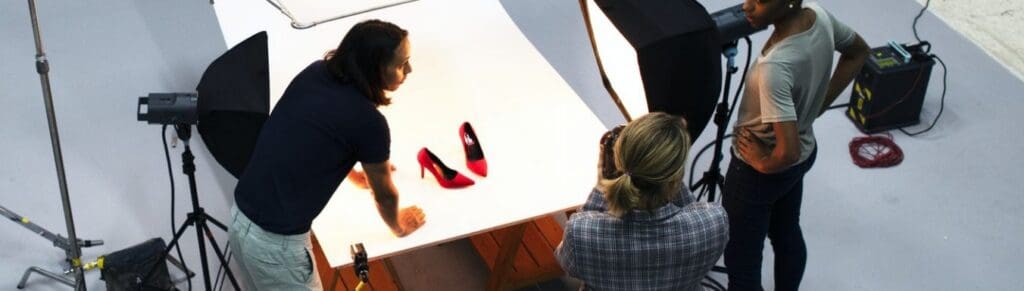
Planning keeps a shoot focused and makes sure the images fit where they will be used.
- List where the photos will appear, such as your website, ads, social media, or print.
- Choose the types of images and how many you need for each channel.
- Pick locations that reflect your brand, such as your office, storefront, or job site.
- Prepare your people and products, including wardrobe, grooming, and props.
- Agree on usage rights, file sizes, and delivery dates before the shoot.
Quick Tip:
Share a short shot list with your photographer a few days ahead. Ranking the must-have images first keeps the day on schedule if time runs short.
What Is the Difference Between Commercial and Advertising Photography?
Advertising photography is one branch of business photography, created for paid campaigns like billboards, print ads, and digital ads. Commercial work is broader and covers any business image, including headshots, product shots, events, and website photos.
Can One Photographer Handle Several Types of Business Photography?
Yes, many photographers cover headshots, brand images, and events in a single shoot or package. Specialized work like architectural or detailed product photography may call for a photographer with dedicated equipment and experience in that niche.
Final Thoughts
Few businesses need all eight types at once. Headshots and brand images help service businesses build trust, product photos drive online sales, and location, food, and event photos bring local customers through the door. Choosing the right mix of commercial photography starts with knowing where your images will appear and which ones your customers look at first.
For Omaha businesses ready to start with headshots and brand images, Christopher Tierney Photography keeps the process simple. One photographer handles your shoot from first contact through final editing, which keeps the style consistent across your team and your marketing. All images are hand-edited without batch presets and delivered in high resolution with no watermarks. Full printing rights are included, so your business can use the photos in print and online with no added cost.
Your next client may meet your team online before meeting them in person. Plan a headshot or brand session with Christopher Tierney Photography and make that first look count.